JOIN US IN ATHENS FOR THE GEORGIA BIKE-WALK-LIVE SUMMIT 9/10-11!
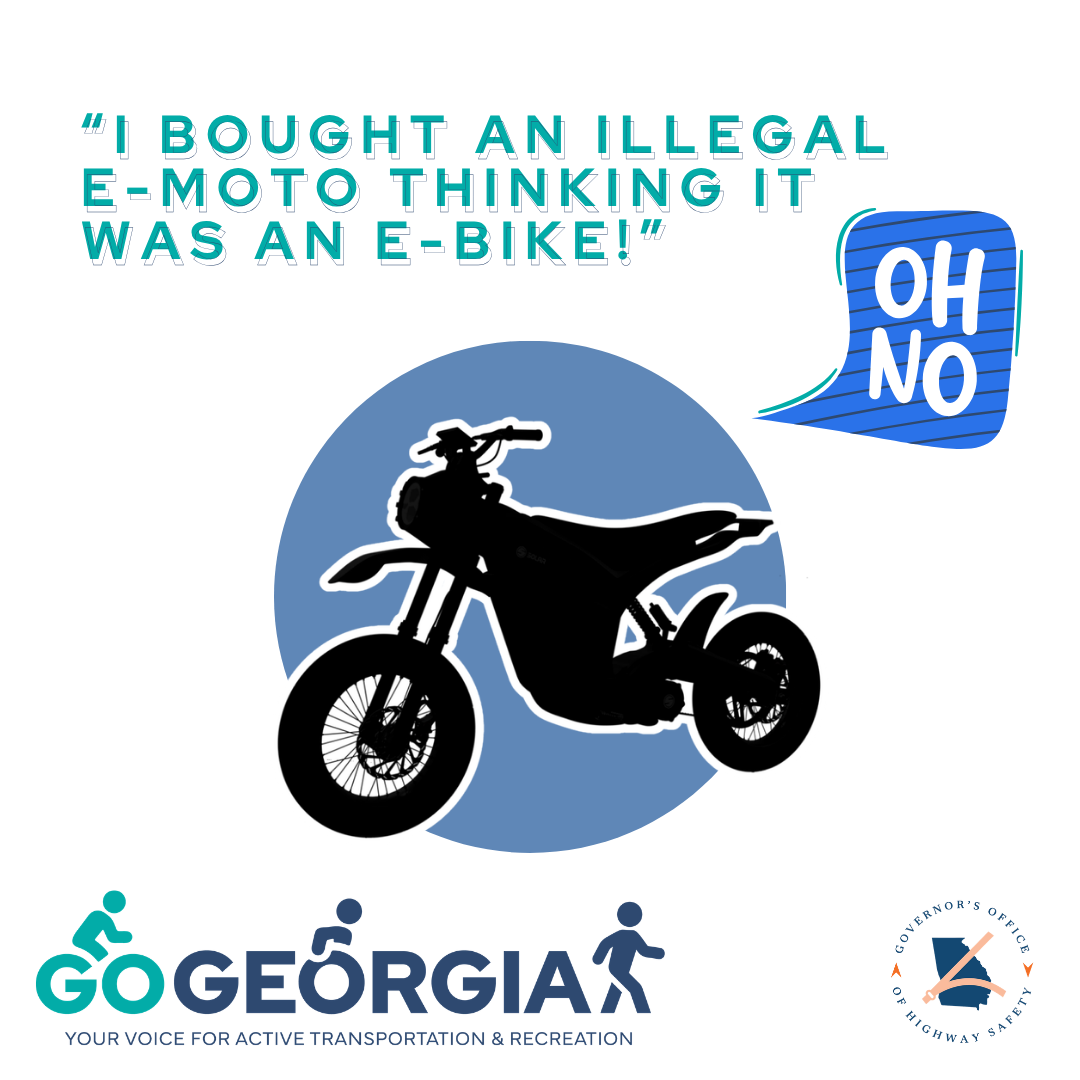
What do you do if you’ve bought an e-moto that you thought was an e-bike? Sometimes this can be as easy as returning the device to the seller, depending on their return policy. However, some online retailers sell illegal or otherwise noncompliant vehicles, so it’s essential to know the difference ahead of time or, if you’ve already made a regrettable purchase, to know your options for recourse.
It’s also possible that you purchased an e-bike second-hand and, although it was initially a class 1, 2, or 3 e-bike, the previous owner modified the motor, battery, or controller to increase its top speed beyond the legal limits. In any case, if a vehicle has a motor wattage greater than 750 or exceeds 28mph, it is not legally an e-bike.
Know Your Ride
In case you missed it, an e-moto is not an e-bike and it’s illegal to operate it in some of the same places where you would ride an e-bike. If you purchased an e-moto that you intend to keep, the first step is to ensure it is legally classified as a motorcycle or a moped. We’ve already covered the definitions and distinctions here. If your e-moto matches the definition of a motorcycle, then you need to get the vehicle registered and make sure you’ve got a dedicated motorcycle operator’s license. Mopeds do not require tag registration, but you do need to have a valid driver’s license.
Received an Illegal E-Moto or a Faulty E-Bike? Here’s Your Action Plan
In the event of receiving a vehicle that is or not compliant with UL electrical and fire safety standards (perhaps the seller applied counterfeit or misleadingly similar UL certification symbols in their advertisements), here is what you can do:
Document Everything
Before you contact anyone, gather all the evidence needed to prove the product is not as described:
Contact the Seller
Before escalating the situation and seeking legal advice, try to resolve the issue directly with the retailer or manufacturer:
File a Payment Dispute
If the seller is uncooperative or unresponsive, use your financial institution to file a payment dispute:
File Official Complaints
If you cannot get a refund directly, report the business to help create a record and trigger investigations:
Legal Options
Prevent this from happening to you again by investigating the retailer’s return policy and its advertisements. Some social media ads can be a trap. Look closely for any signs of fraud or false advertisement. Your safest option is to purchase an e-bike from your local bicycle shop.
Reference:
This article is written by Go Georgia and supported by the Governor’s Office of Highway Safety.


